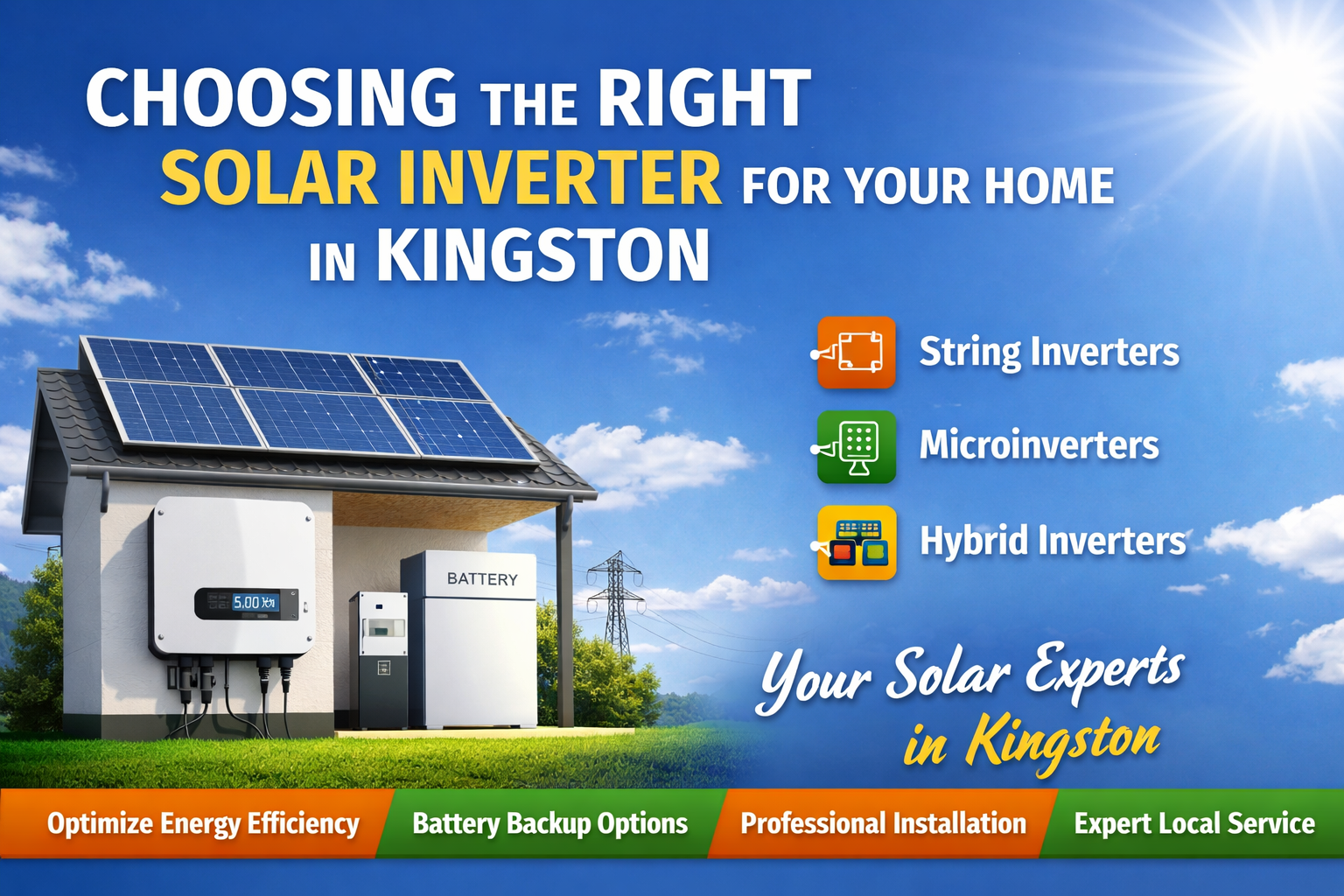
Switching to solar energy in Kingston is a smart investment for homeowners looking to reduce electricity costs and gain energy independence. However, while solar panels often get the most attention, the solar inverter is the true backbone of your system. It converts the direct current (DC) produced by solar panels into usable alternating current (AC) for your home.
Choosing the right solar inverter can significantly impact your system’s performance, efficiency, and long-term savings. In this guide, we’ll walk you through everything you need to know to make an informed decision.
Why the Solar Inverter Matters
A solar inverter does much more than just convert electricity. It plays a crucial role in:
- Monitoring system performance
- Ensuring safety and grid compliance
- Managing battery storage (in hybrid systems)
- Optimizing energy efficiency
A poor-quality inverter can reduce your solar system’s efficiency and lead to higher maintenance costs. That’s why selecting the right one is essential for homeowners in Kingston.
Types of Solar Inverters
Understanding the different types of solar inverters is the first step in choosing the best option for your home.
1. String Inverters
These are the most common and cost-effective option.
Best for: Homes with simple roof layouts and consistent sunlight exposure.
Advantages:
- Affordable
- Easy to install and maintain
- Proven technology
Limitations:
- Performance drops if one panel is shaded
- Less flexibility in system design
2. Microinverters
Installed on each solar panel, microinverters convert electricity individually.
Best for: Homes with shading issues or complex roof designs.
Advantages:
- Higher efficiency in partial shading
- Panel-level monitoring
- Longer lifespan
Limitations:
- Higher upfront cost
3. Hybrid Inverters
Hybrid inverters combine solar and battery management in one system.
Best for: Homeowners planning to add battery storage or backup power.
Advantages:
- Battery-ready
- Energy independence
- Ideal for areas with power outages
Limitations:
- More expensive than standard inverters
Key Factors to Consider
When choosing a solar inverter for your Kingston home, consider the following:
1. Energy Needs
Evaluate your household’s electricity consumption. A properly sized inverter ensures optimal performance and prevents energy loss.
2. Grid Compatibility
In Kingston, your inverter must meet local grid standards to safely connect with the utility system.
3. Efficiency Rating
Look for inverters with high efficiency (typically above 95%). Higher efficiency means more usable energy and better savings.
4. Battery Compatibility
If you’re planning to install batteries in the future, choose a hybrid inverter or one that supports battery integration.
5. Warranty and Durability
A good inverter should come with at least a 5–10 year warranty. Kingston’s tropical climate makes durability especially important.
Solar Inverter Sizing Explained
Sizing your inverter correctly is crucial. An undersized inverter won’t handle your energy load, while an oversized one can waste money.
Typically, inverter capacity should match your solar panel system size. For example:
- 5kW solar system → 5kW inverter
- 10kW solar system → 8–10kW inverter (depending on design)
A professional installer can help you determine the exact size based on your energy usage and roof conditions.
Importance of Professional Installation
Even the best inverter won’t perform well if it’s not installed correctly. Professional installation ensures:
- Proper wiring and safety compliance
- Optimal placement for cooling and efficiency
- Accurate system configuration
In Kingston, working with experienced solar providers ensures your system meets local standards and performs reliably over time.
Common Mistakes to Avoid
When selecting a solar inverter, avoid these common pitfalls:
- Choosing based only on price: Cheap inverters often compromise on quality and lifespan
- Ignoring future needs: Not planning for battery storage can limit your options later
- Overlooking warranty: A short warranty may lead to higher replacement costs
- DIY installation: This can cause safety risks and reduce system efficiency
Future Trends in Solar Inverters
Solar technology continues to evolve, and modern inverters now offer advanced features such as:
- Smart monitoring via mobile apps
- AI-based energy optimization
- Integration with smart home systems
- Improved battery management
Investing in a future-ready inverter can increase the long-term value of your solar system.
Final Thoughts
Choosing the right solar inverter is just as important as selecting quality solar panels. It directly affects your system’s efficiency, reliability, and overall return on investment.
For homeowners in Kingston, the ideal inverter depends on your energy needs, roof design, budget, and whether you plan to include battery storage. Taking the time to evaluate your options will ensure you get the most out of your solar investment.
Get Free Consultation
If you’re planning to install or upgrade your solar system, making the right inverter choice can feel overwhelming. That’s where expert guidance makes all the difference.
At Premier Energy Solution, we help homeowners choose the most efficient and cost-effective solar inverter tailored to their needs. Whether you’re starting fresh or upgrading your existing system, our team is here to guide you every step of the way.
👉 Get a Free Consultation today and take the first step toward smarter, more reliable solar energy for your home in Kingston.
Contact Us:
Website: Premier Energy Solution Limited
Phone Number: +1 876-777-7764
Facebook: Premier Energy Solution Limited
Instagram: Premier Energy Solution Limited
Linkedin: Premier Energy Solution Limited
Youtube: Premier Energy Solution Limited
Frequently Asked Questions (FAQs)
1. What size solar inverter do I need for my home in Kingston?
The size of your solar inverter depends on your energy consumption and the size of your solar panel system. Typically, the inverter capacity should closely match your system size (e.g., a 5kW system uses a 5kW inverter). A professional assessment ensures accurate sizing for maximum efficiency.
2.Which type of solar inverter is best for residential use?
It depends on your needs:
- String inverters are ideal for simple setups with no shading
- Microinverters work best for roofs with shading or complex layouts
- Hybrid inverters are perfect if you want battery backup and energy independence
3.How long does a solar inverter last?
Most solar inverters last between 10 to 15 years, depending on the brand and usage conditions. High-quality models may last longer, especially with proper maintenance and installation.
4. Why should I choose Premier Energy Solution for my solar inverter installation?
Premier Energy Solution is known for its expert guidance, high-quality products, and customer-focused service. Their team carefully assesses your energy needs and recommends the most efficient inverter solution, ensuring long-term performance and savings for your home in Kingston.
5.Does Premier Energy Solution provide support after installation?
Yes, Premier Energy Solution offers reliable after-sales support, including system monitoring guidance, maintenance assistance, and expert help whenever needed. This ensures your solar inverter continues to operate efficiently for years to come.