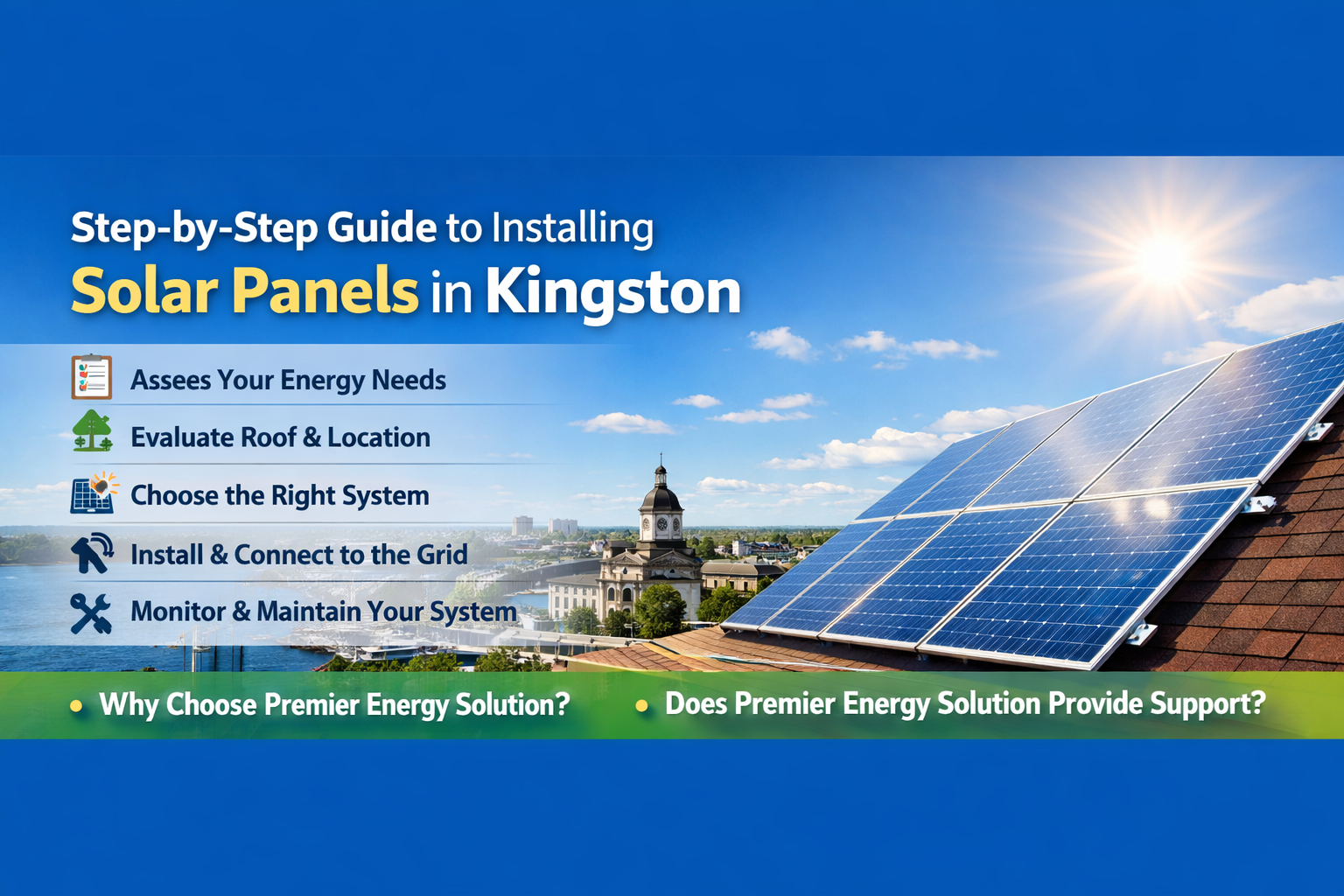
With rising electricity costs and growing environmental concerns, solar energy has become an increasingly popular solution for homeowners and businesses in Kingston. Installing solar panels not only reduces your electricity bills but also contributes to a cleaner, more sustainable future. If you’re considering making the switch, this step-by-step guide will walk you through the entire process in a simple and practical way.
1. Assess Your Energy Needs
Before installing solar panels, it’s important to understand your current electricity usage. Review your utility bills from the past 6–12 months to determine your average monthly consumption. This helps you decide the size of the solar system you’ll need.
For example, a household with high air-conditioning usage will require a larger system compared to one with minimal energy consumption. Proper assessment ensures you don’t overspend or underpower your setup.
2. Evaluate Your Roof Condition and Location
The next step is to check whether your roof is suitable for solar panel installation. In Kingston, sunlight is abundant, but factors like roof direction, tilt, and shading still matter.
- Direction: South-facing roofs (in most regions) receive maximum sunlight
- Tilt angle: A moderate slope is ideal for better efficiency
- Shading: Avoid areas with trees, buildings, or obstacles blocking sunlight
Also, ensure your roof is structurally strong and in good condition. If repairs are needed, it’s best to fix them before installing panels.
3. Choose the Right Solar System
There are different types of solar systems available, and selecting the right one depends on your needs and budget:
- Grid-tied system: Connected to the main electricity grid; most common and cost-effective
- Off-grid system: Independent system with battery storage; ideal for remote areas
- Hybrid system: Combines grid connection with battery backup
In Kingston, grid-tied systems are popular due to their affordability and ease of maintenance, but hybrid systems are gaining attention for added reliability during power outages.
4. Select High-Quality Equipment
Your solar system’s performance largely depends on the quality of components used. The key components include:
- Solar panels
- Inverter (converts DC to AC electricity)
- Mounting structure
- Batteries (optional)
Always choose durable and efficient products from trusted suppliers. While cheaper options may seem attractive, they often lead to lower efficiency and higher maintenance costs over time.
5. Get Necessary Permits and Approvals
Before installation, you may need permits or approvals from local authorities or utility companies in Kingston. These regulations ensure your system meets safety and technical standards.
Professional solar installers usually handle this process for you, making it hassle-free. Skipping this step can lead to legal issues or delays in connecting your system to the grid.
6. Install the Mounting System
The installation process begins with setting up the mounting structure. This framework supports the solar panels and keeps them securely attached to your roof.
Installers carefully position the mounts to ensure proper alignment and angle for maximum sunlight exposure. This step is crucial for long-term performance and durability.
7. Install the Solar Panels
Once the mounting system is ready, the solar panels are placed and securely fixed onto the structure. The panels are arranged in a configuration that maximizes energy production based on your roof layout.
Proper spacing and positioning help improve airflow, reducing overheating and enhancing efficiency.
8. Electrical Wiring and Inverter Setup
After panel installation, the system is connected through electrical wiring. The panels generate direct current (DC), which is then sent to an inverter to convert it into usable alternating current (AC).
Safety is critical at this stage, so it should always be handled by qualified professionals. Incorrect wiring can lead to inefficiencies or potential hazards.
9. Connect to the Grid and Test the System
If you’re installing a grid-tied system, the final step is connecting it to the utility grid. Once connected, your system can supply power to your home and even send excess energy back to the grid (depending on local policies).
The installer will test the entire system to ensure everything is functioning correctly. This includes checking energy output, inverter performance, and overall safety.
10. Monitor and Maintain Your System
After installation, regular monitoring helps ensure your system is performing efficiently. Many modern systems come with apps or dashboards that allow you to track energy production in real time.
Maintenance is relatively simple:
- Clean panels occasionally to remove dust and debris
- Inspect for any damage or loose connections
- Schedule professional checkups if needed
With proper care, solar panels can last 20–25 years or more, making them a long-term investment.
Benefits of Installing Solar Panels in Kingston
Switching to solar energy offers several advantages:
- Lower electricity bills
- Energy independence
- Reduced carbon footprint
- Increased property value
Kingston’s sunny climate makes it an ideal location for solar power, allowing homeowners to maximize their return on investment.
Final Thoughts
Installing solar panels may seem complex at first, but with the right guidance and professional support, the process becomes straightforward and rewarding. From assessing your energy needs to monitoring your system, each step plays a vital role in ensuring long-term efficiency and savings.
If you’re ready to make the switch to clean and reliable energy, now is the perfect time to take action.
Get Free Consultation today with Premier Energy Solution and start your journey toward sustainable and cost-effective solar power.
Contact Us:
Website: Premier Energy Solution Limited
Phone Number: +1 876-777-7764
Facebook: Premier Energy Solution Limited
Instagram: Premier Energy Solution Limited
Linkedin: Premier Energy Solution Limited
Youtube: Premier Energy Solution Limited
Frequently Asked Questions (FAQs)
- How much does it cost to install solar panels in Kingston?
The cost depends on the size of the system, equipment quality, and installation complexity. On average, residential systems can vary significantly, but the long-term savings on electricity bills often outweigh the initial investment. - How long does it take to install solar panels?
The physical installation usually takes 1–3 days. However, the complete process—including permits and approvals—can take a few weeks depending on local regulations and utility company processing times. - Do solar panels work during cloudy or rainy days?
Yes, solar panels still generate electricity during cloudy or rainy weather, though at reduced efficiency. Kingston’s generally sunny climate ensures consistent energy production throughout the year. - Why should I choose Premier Energy Solution for solar installation in Kingston?
Premier Energy Solution is known for providing high-quality solar equipment, expert installation, and reliable customer support. Their experienced team ensures a smooth process from consultation to installation, helping you get the best value and long-term performance from your solar system. - Does Premier Energy Solution offer support after installation?
Yes, Premier Energy Solution provides ongoing support, including system monitoring guidance, maintenance assistance, and customer service to ensure your solar panels continue to perform efficiently for years to come.